PNIC: the paramedic clinical integration program in Quebec
PNIC: $500 to register, to be passed within 2 years of graduating (Québec.ca, March 2025). The three parts, who must take it and the registry.
· By the Agent Ambulancier editorial team · Lire en français
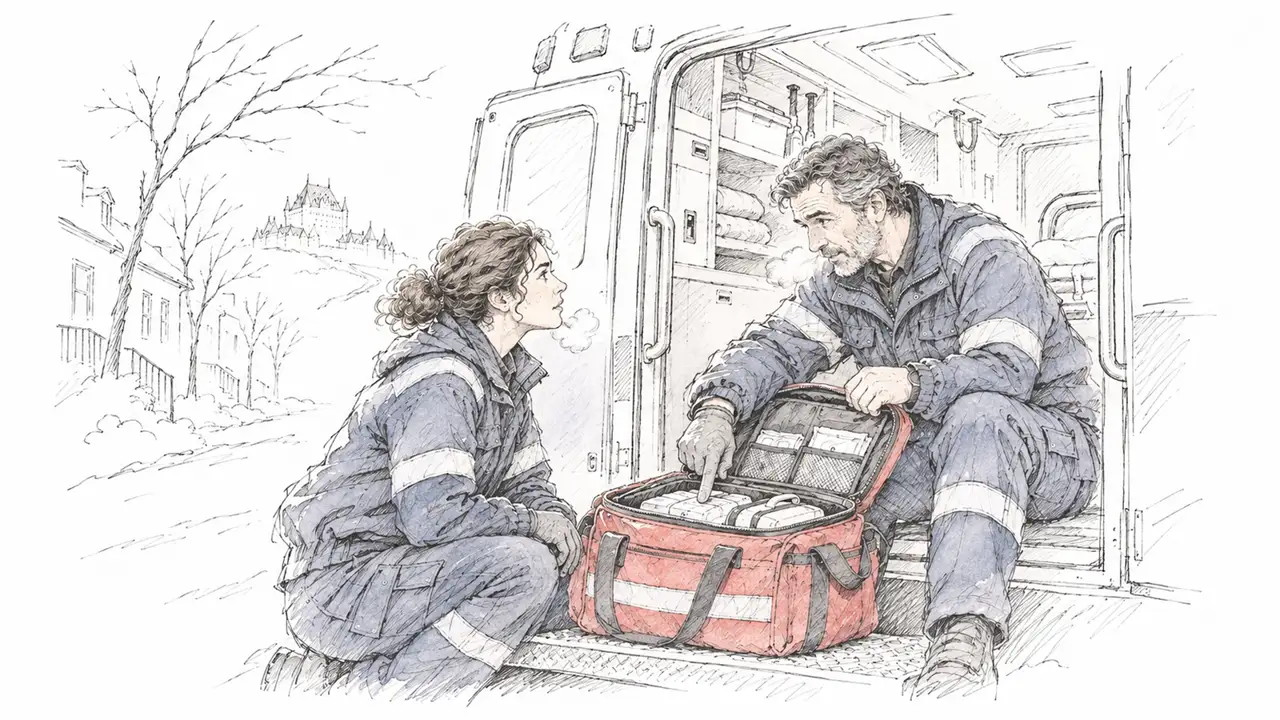
The PNIC, or Programme national d'intégration clinique (the national clinical integration program for paramedics in Quebec), costs $500 for a new registration, according to Québec.ca (page updated March 24, 2025). It must be passed within 2 years of graduating. It is the step between the diploma and working as a paramedic.
For the full path, see how to become a paramedic. This text applies to women and men alike.
In an emergency, call 911.
PNIC: what it is
To practise in Quebec, a primary care paramedic must hold a college diploma (DEC), have taken the PNIC and passed its assessments. The person must also be registered in the national workforce registry of ambulance technicians.
The Règlement sur les conditions d'inscription d'un technicien ambulancier au registre national de la main-d'œuvre states that the program is established by the national medical director of pre-hospital emergency services. The regulation is up to date as of July 1, 2026.
Québec.ca does not give the total length of the program.
Who must take it
The PNIC is mainly for new graduates of the Pre-Hospital Emergency Care program. The regulation also covers a person whose training was recognized as equivalent by the national medical director.
In both cases, the deadline to pass the program is 2 years (section 6). It runs from the date of the diploma, or from the recognition of the training. Québec.ca does not detail how to request that recognition.
An official professional certificate issued elsewhere in Canada and recognized by the national medical director opens a third route (section 1). Section 2, which requires the PNIC, does not mention it. According to Québec.ca, the registration request then goes through the labour mobility process for a primary care paramedic.
After time away from the job, the regulation provides for a skills assessment. The regional medical director may require it, for example after more than 4 months without clinical activity (section 13).
The three parts of the PNIC
Québec.ca describes three parts.
- The theory exam: about a hundred multiple-choice questions, some tied to a scenario. The passing mark is 60%. The exam lasts 3 hours
- The assignment on professional ethics and legal responsibilities: 30 multiple-choice questions, online, on the same day as the exam. There is no passing mark. Completing it validates this part
- The practical part: two integration activities, within a workplace professional integration program
The practical part includes these two activities.
- Practical workshops where three of the five modules are assessed through a certifying evaluation or an objective structured clinical examination, at the local health institution or at Urgences-santé (the ambulance service for Montreal and Laval)
- Work shifts where 10 complete calls are carried out, including transport to the hospital. These shifts can fall on weekdays or weekends, by day, evening or night
The practical part is passed if there are no critical errors in either activity.
Accommodations are possible for the theory exam only, provided the PNIC registration file is in order.
Registering and paying
Registration is done online on the secure Préhospitalier Québec portal, up to five business days before the program starts. The $500 fee applies to any new registration and is payable by credit card only.
According to the Guide aux nouveaux diplômés (guide for new graduates), each retake of the theory exam costs $200. You get three attempts. Arriving late on exam day is not accepted: you must retake the exam later and pay the $200 again.
A job offer signed by an employer must be attached as a PDF. It must be dated within the six months before the request is filed. See our article on paramedic jobs.
You can reach the PNIC management team by email at registretap@sante.quebec or by phone at 1 888 882-6452. Québec.ca also points to the Guide aux nouveaux diplômés and the Plan directeur for the evaluation process.
The link with the registry and the status card
According to Québec.ca, registration in the national registry and in the PNIC can be done at the same time. Under the regulation, a technician is admitted to the program after filing a registry application with the required documents (sections 3 and 5).
The technician is entered in the registry once the application meets every condition of the regulation, including passing the PNIC (sections 2, 7 and 8). Upon registration, the technician obtains an active status card that allows practice across Quebec (section 9). According to Québec.ca, registration is renewed every four years.
The other registration conditions are in our article on the Class 4A licence. This text is not legal advice.
Did you like this article?
Thank you. It is anonymous, and it tells us what to write next.
← Back to Agent Québec, all six professions
Frequently asked questions
What is the PNIC for a paramedic?
It is the Programme national d'intégration clinique, required on top of the college diploma and registration in the national registry. It includes a theory exam, an assignment on ethics and legal responsibilities and a practical part in the workplace. The national medical director of pre-hospital emergency services establishes it.
How much does the PNIC cost?
Québec.ca lists a $500 fee for any new registration, payable by credit card only. The page was updated on March 24, 2025. Check the amount on the portal before paying.
How long do you have to pass the PNIC after graduating?
Two years from the date the diploma is obtained, according to section 6 of the regulation. For training recognized as equivalent, the deadline runs from the recognition by the national medical director.
What is the passing mark for the theory exam?
60%. The exam has about a hundred multiple-choice questions. The ethics assignment has no passing mark.
Do you need a job offer to register for the PNIC?
Yes. It must be signed by an employer, attached as a PDF and dated within the six months before the request is filed.
What if the employer I want cannot give me a job offer?
Québec.ca asks for a job offer signed by an employer, without saying which one. A genuine offer from another employer therefore meets the requirement. The page does not say whether that offer obliges you to work for that employer. Ask the employer before you sign, then ask the PNIC team: registretap@sante.quebec or 1 888 882-6452. Never attach a fake document. It is a false statement in an application to the government.
How much does a PNIC retake cost?
$200 per retake of the theory exam, with three attempts in total. For the practical part, only one registration is allowed. After a failure, the candidate gets support of up to four hours per failed competency or one extra shift on the road. If the difficulties continue, the candidate is referred to a refresher program that costs $150 per day.
Are the practical-part shifts paid?
The ministry's official guides do not say. They refer to a hiring process and the employer sets the shift schedule. Ask the employer before you start.
Does a paramedic trained outside Quebec have to take the PNIC?
If the training is recognized as equivalent by the national medical director, yes, within 2 years of the recognition. For a recognized Canadian professional certificate, section 2 does not mention the PNIC. According to Québec.ca, the request then goes through the labour mobility process for a primary care paramedic.
Where do you register for the PNIC and who do you contact?
On the Préhospitalier Québec portal, up to five business days before the program starts. For questions, write to registretap@sante.quebec or call 1 888 882-6452.
Did you like this article?
Thank you. It is anonymous, and it tells us what to write next.
← Back to Agent Québec, all six professions
Sources
- Programme national d'intégration clinique, Québec.ca, last updated March 24, 2025, consulted November 25, 2026
- Registre national de la main-d'œuvre des techniciens ambulanciers, Québec.ca, last updated December 19, 2025, consulted November 25, 2026
- Programme national d'intégration clinique – Guide aux nouveaux diplômés, Ministère de la Santé et des Services sociaux and Santé Québec, publication 23-929-22W, 2025, sections 3.1, 4.1, 5.2, 5.8 and 6.3.3, consulted November 25, 2026
- Règlement sur les conditions d'inscription d'un technicien ambulancier au registre national de la main-d'œuvre, chapter S-6.2, r. 1, sections 1, 2, 3, 5, 6, 7, 8, 9 and 13, LégisQuébec, up to date as of July 1, 2026